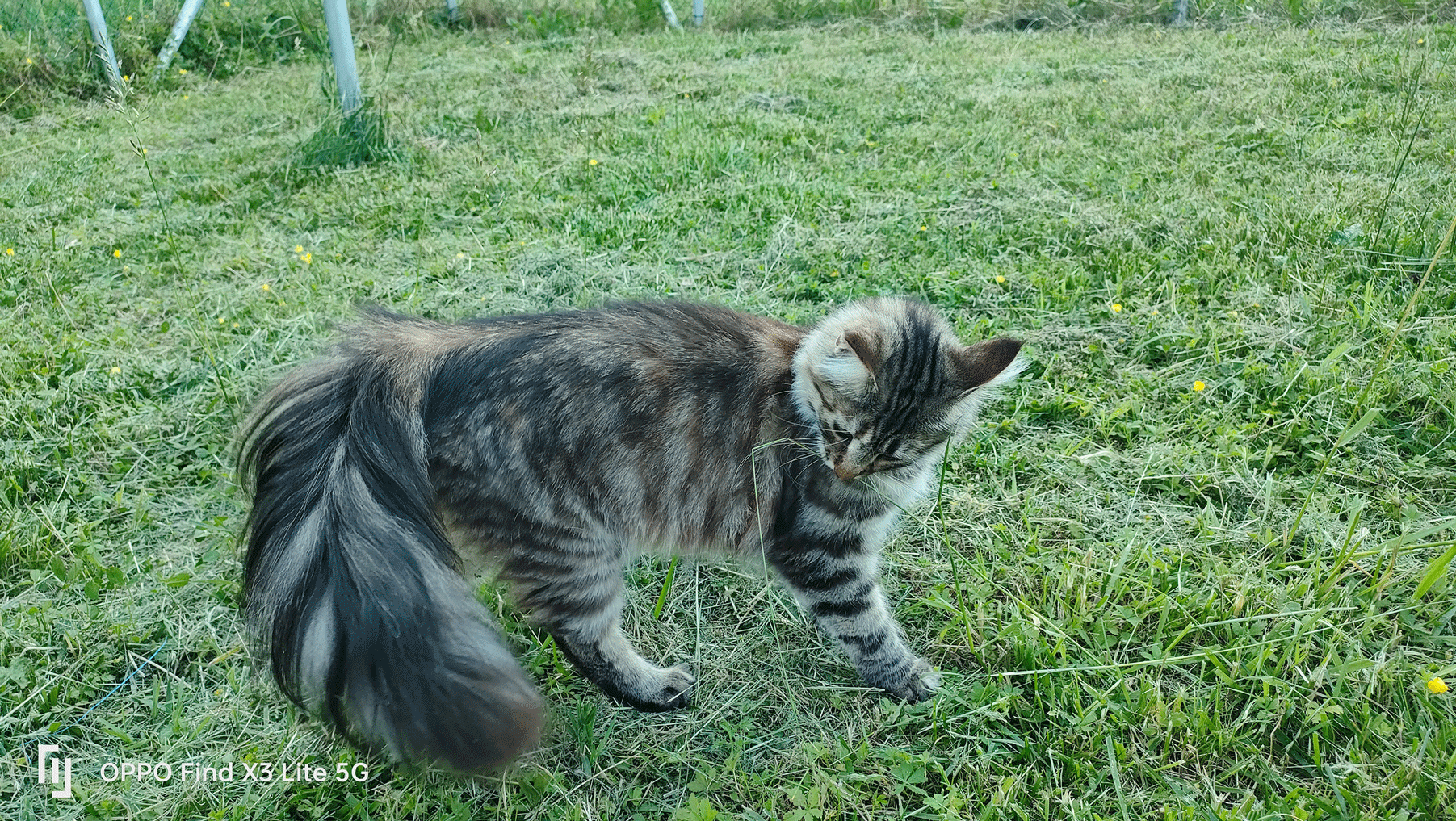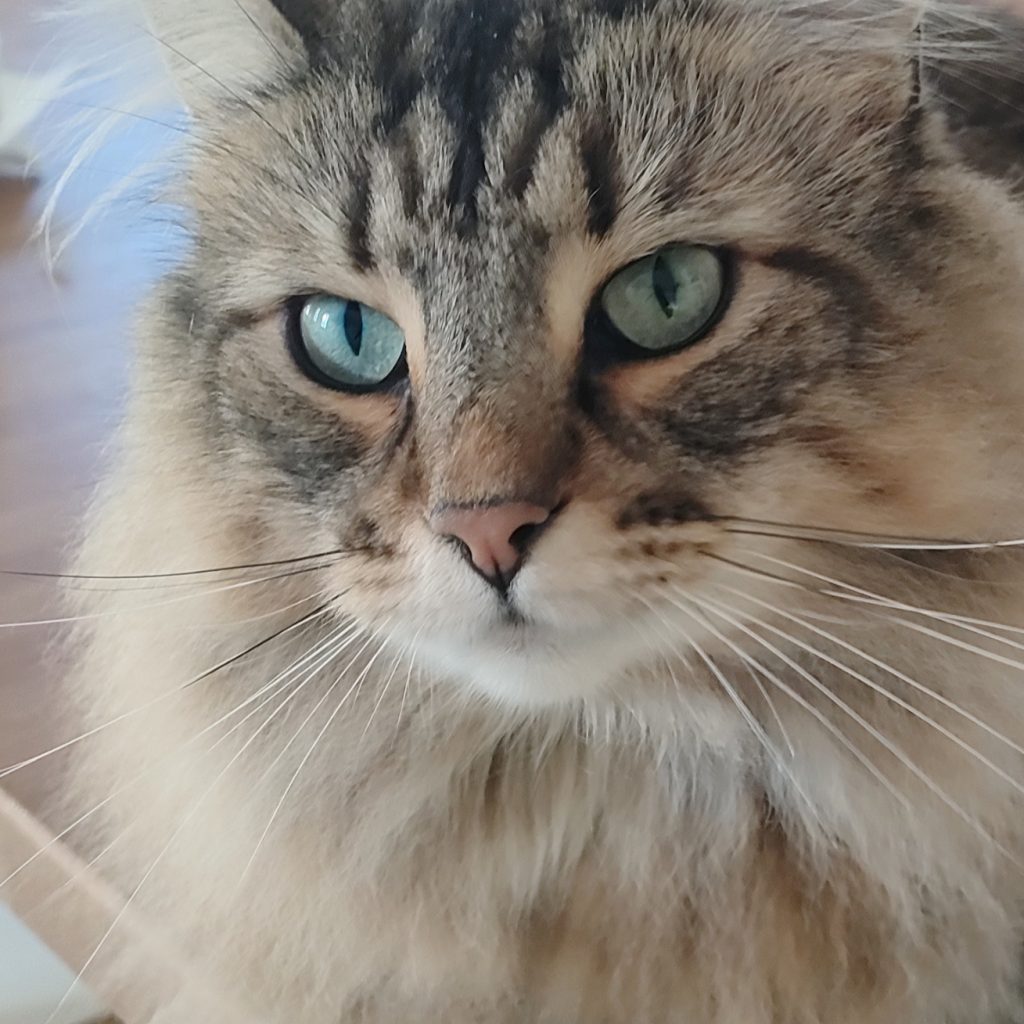

Norwegian Forest Cat
Norwegian Forest Cat history
Norwegian Forest Cats are very common in Europe, mainly because of their charm and friendly nature. They can also be kept indoors, making them suitable for apartments and homes where the yard cannot be made safe.
The Norwegian Forest Cat is a purebred cat, not the result of crossbreeding due to human intervention. The breed originates from Scandinavia, and in some areas of Norway and Sweden, these cats can still be found in the wild.
The cats were first exhibited at a show in the early 1900s, and interest in the breed has grown ever since. A breeding program was launched to ensure they did not go extinct due to the gradual disappearance and human encroachment on their natural habitat; the breed was not officially recognized until 1977.
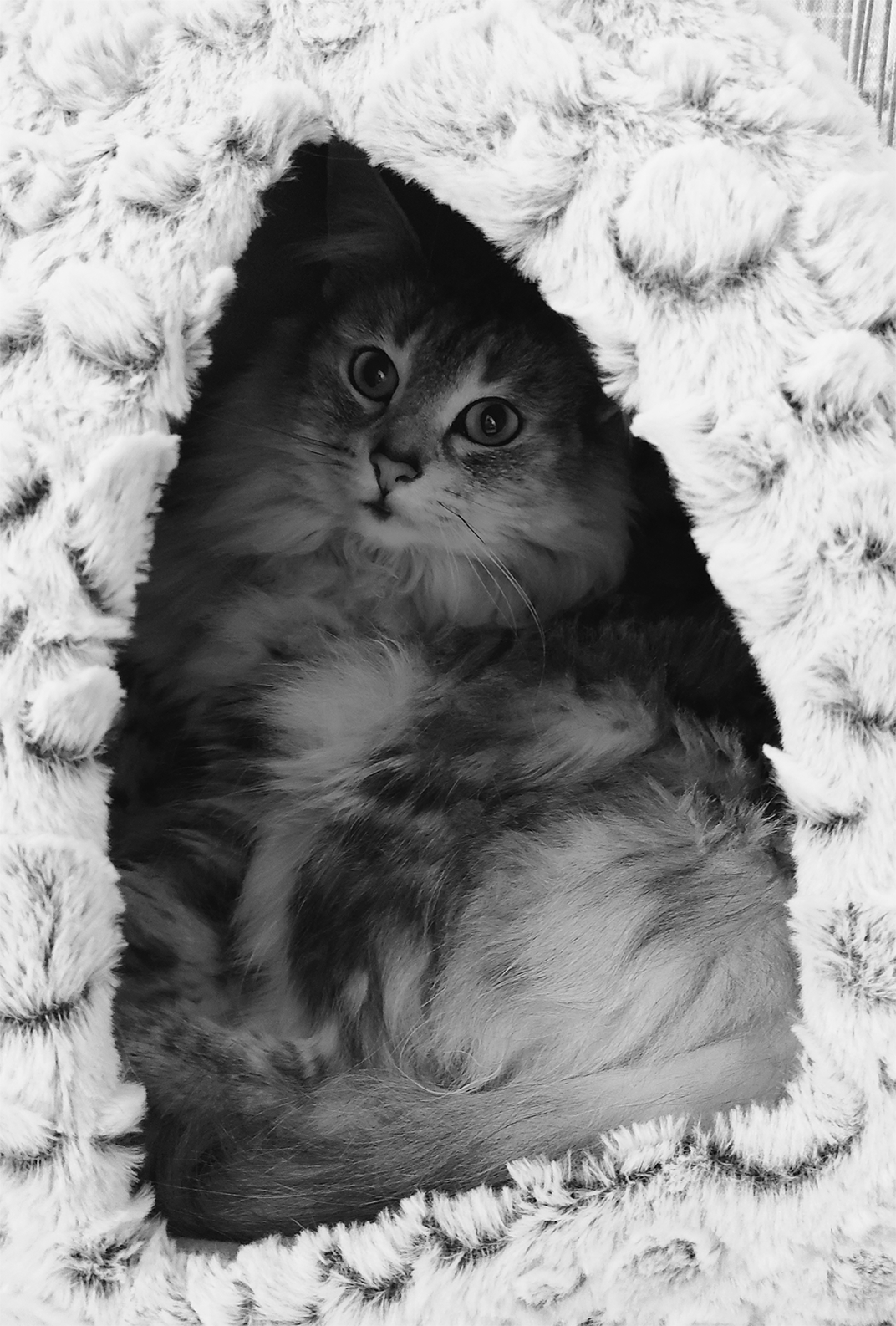
PERSONALITY OF THE NORWEGIAN FOREST CAT
Although they are one of the three large cat breeds—along with Siberians and Maine Coons—these cats are prized for their gentle and docile nature. They are generally very sociable and calm.
Two other defining traits of this breed are intelligence and playfulness. It’s important to set aside time for play and vary activities often. Since they’re very intelligent, they get bored easily, so it’s best to always provide them with new stimuli. You’ll notice how your Norwegian Forest Cat watches you and tries to figure out what you’re doing.
Children or other pets will not be a problem if you wish to adopt a Norwegian Forest Cat.
You might think that Norwegian Forest Cats need to be outdoors, but that is not the case. You can keep the cat indoors, provided it has enough space and sufficient stimulation and distractions. Consider, for example, a scratching post that it can also climb. The Norwegian Forest Cat loves to reach vantage points where it can survey everything from above and is the only breed that can climb down a tree headfirst like a squirrel.
If you want to let your cat outside, you should be able to completely enclose the yard and create a cat run. Because of its curious nature, it might wander too far and get lost. Furthermore, with purebred cats, there is always the risk of them being stolen. When securing your yard, remember that the Norwegian Forest Cat is capable of jumping very high due to its size. A tall fence may not be sufficient, and the solution may be to hang netting or ensure that the top of the fence is inaccessible. Also, always make sure the cat cannot, for example, jump onto a trash can to climb onto a roof.
Its adaptability means it will happily accept a harness and leash, accompanying you on walks.
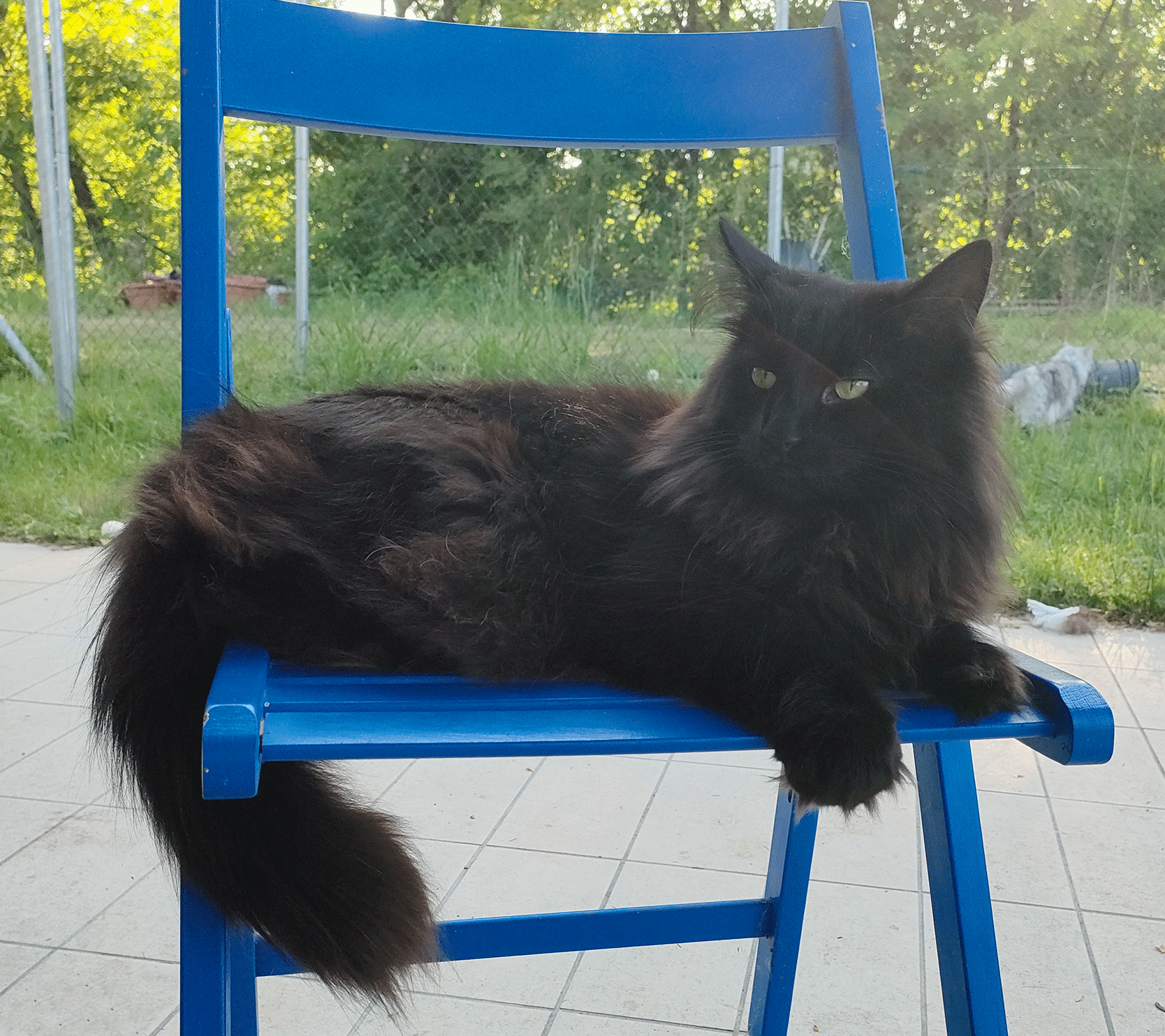
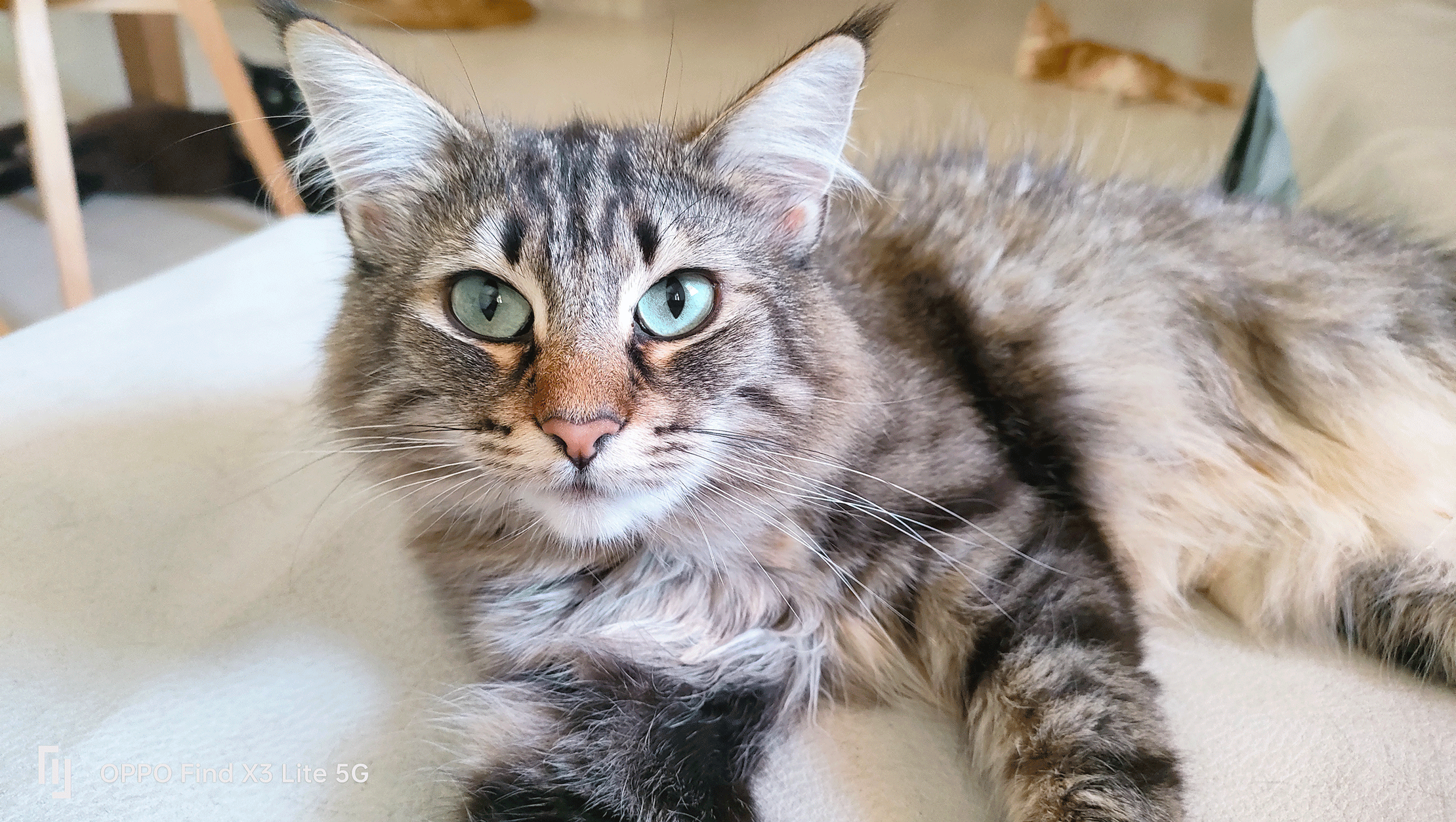
LEGENDS OF THE NORWEGIAN FOREST CAT
The Norwegian Forest Cat is a very ancient breed that originated naturally in the forests of Norway.
“In the ancient, cold forests of northern Norway, swept by icy winds and inhabited by mysterious creatures, a proud and wild figure roams. The Norwegian Forest Cat, an ancient and legendary breed. The origins of the Norwegian Forest Cat are shrouded in myth, and it is said to have been created by the goddess Freya, one of the most powerful and admired deities in Norse mythology. Freya wished to bring to life a creature that could embody the strength, grace, and independence of the wild nature of the northern forests. She took stars, moonlight, and the breath of the wind dancing among the trees, and her magic shaped the first Norwegian Forest Cat. Its coat, thick and water-repellent, protects the cat from the harsh elements of the Scandinavian climate; its paws, sturdy and suited for climbing trees with agility; its ears, large and sensitive, capable of perceiving the hidden sounds of the forest; and a long, bushy tail, ideal for balancing among the branches. Once created, the Norwegian Forest Cat came to life, proving itself not only a skilled hunter but also an affectionate, independent, and adventurous companion. With its dexterity and ability to move stealthily among the trees, it became the forest’s guardian and protector. People, captivated by its beauty and character, began to regard it not only as a valuable ally in hunting but also as a member of the family, capable of bringing good fortune and prosperity. It was said that the touch of a Norwegian Forest Cat could heal and soothe the sorrows of the soul, and that its purrs held an almost magical power.”
Legend has it that these cats, in addition to pulling the chariot of the goddess Freya, accompanied the Vikings on their expeditions, thanks to their loyalty, endurance, and skill in hunting rodents.
CARE AND NUTRITION FOR NORWEGIAN FOREST CATS
Caring for these cats is fairly simple. You should brush their coat thoroughly once a week to remove loose hair and prevent matting. During shedding season, daily brushing will be necessary. If you make sure to do this regularly, you’ll prevent your cat from swallowing too much hair—which could form hairballs in its throat—and your home will stay cleaner.
Generally, these cats enjoy being brushed, which makes the process easier. It’s advisable to get your kitten used to being brushed right from the start by using the brush as if it were a toy.
They are very active cats even when kept indoors, so they do not tend to become overweight. They know how to regulate their food intake without overeating. They are not picky, but you must pay attention to the quality of their food. Wet and dry foods containing grains—especially rice, which they are intolerant to—should be avoided, except for short-term veterinary needs. You must ensure they consume a diet high in protein.
Like other purebred cats, most Norwegian Forest Cats enjoy good health. Purebred cats are generally predisposed to certain hereditary conditions related to breeding, but this is not the case with the Norwegian Forest Cat since it is not the result of crossbreeding. Crossbreeding with cats of this breed is, moreover, prohibited, which further protects them from any external influences. In any case, we recommend always asking the breeder if the kitten’s parents have been tested for hereditary conditions. A good breeder prioritizes the health of their breeding stock and will certainly provide you with the test results you request.
APPEARANCE OF THE NORWEGIAN FOREST CAT
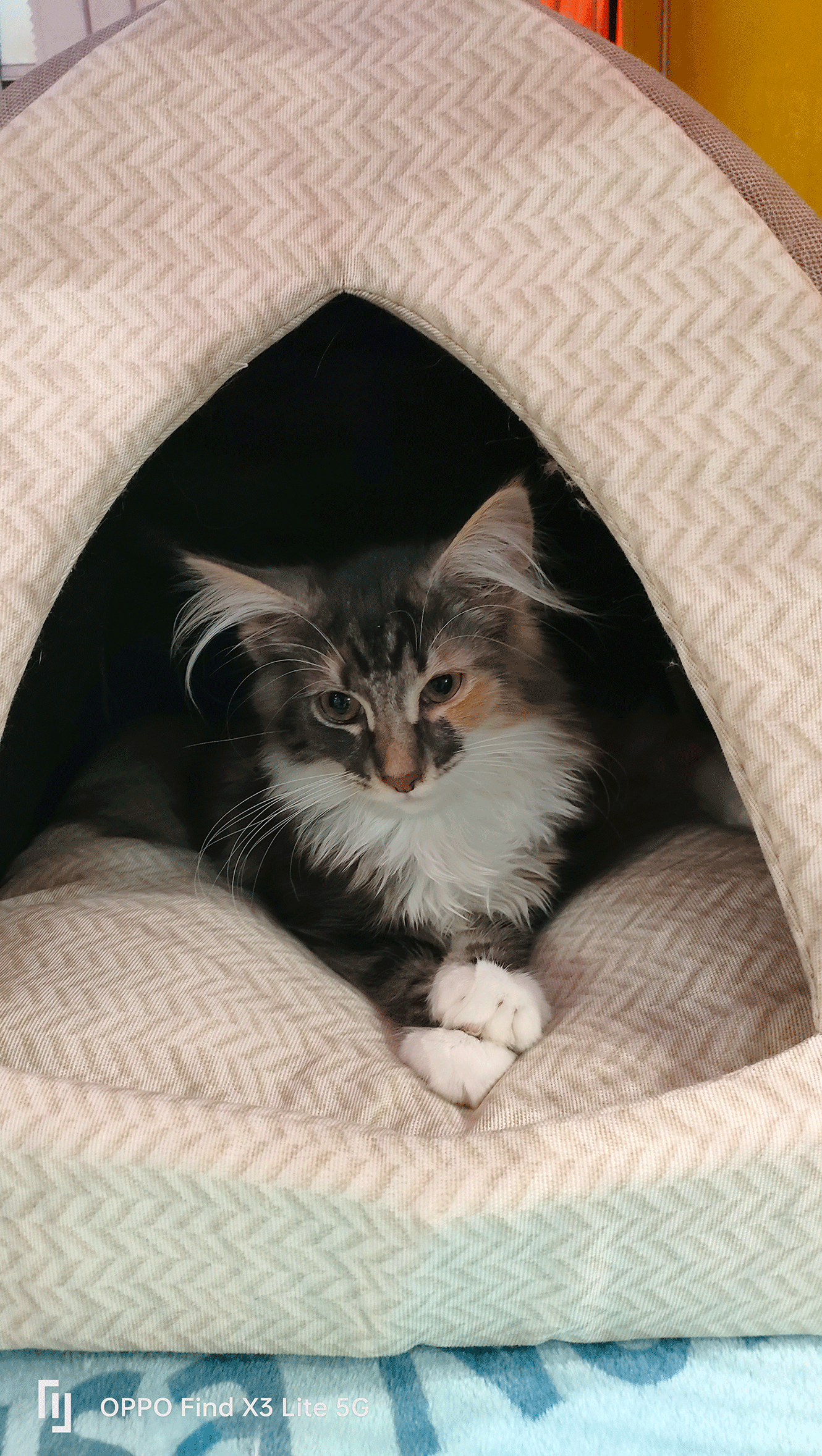
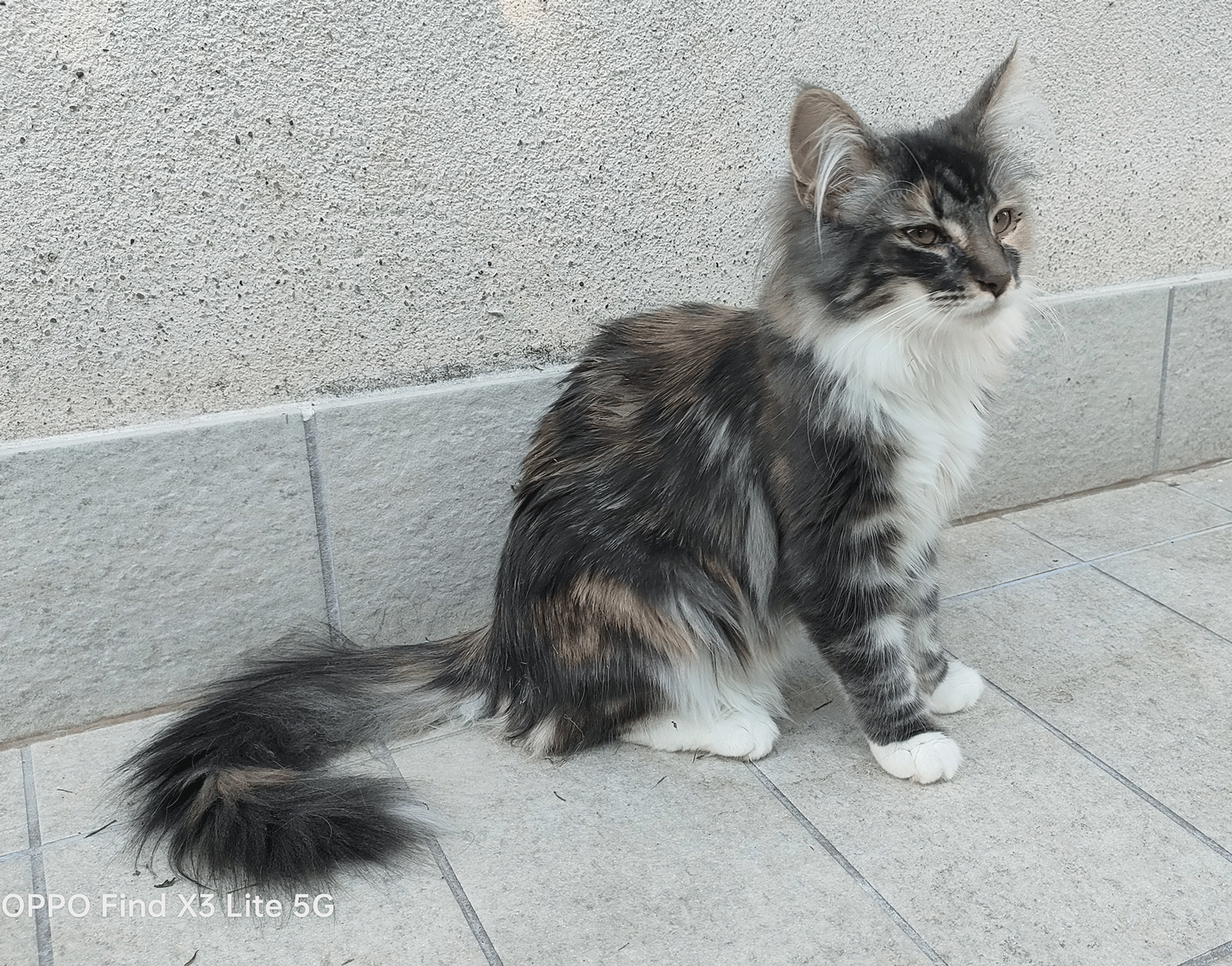
This breed is much larger than the average domestic cat. Like other large cat breeds, the Norwegian Forest Cat does not reach full maturity until it is 3–4 years old. Adult males weigh an average of 6–8 kg, while females weigh 3.5–5.5 kg.
This breed has a double coat: a soft, smooth undercoat that can be slightly oily, and a long, dense, water-repellent outer coat. For this reason, they look bulkier in winter, while in summer they can resemble short-haired cats.
They also have fur between their paws, allowing them to walk on fresh snow.
breed standard according to WCF
Body.
Medium to large in size, the cat has an elongated body with a sturdy bone structure. The legs are long and muscular, with the hind legs longer than the front legs. The paws are rounded, with fur between the pads.
Tail.
The tail is long (as long as the body) and bushy.
Head.
The head is shaped like an equilateral triangle with a long, straight profile; the chin must be firm and the head slightly rounded.
Ears.
The ears are large with a broad base and set high on the head, so that their shape continues the line of the head. They are lined with fur and have small tufts at the tips.
Eyes.
The eyes are large, open, and slightly oval. Blue or odd-colored eyes are permitted only in pure white cats.
Coat.
The coat is of medium length. The woolly undercoat is covered by a long, thick, water-repellent outer coat. The outer coat covers the body down to the hindquarters and along the entire tail. The underside of the cat and the hind legs have only the undercoat.
Color.
Chocolate and Cinnamon are not permitted colors. All other colors are permitted with any amount of white.